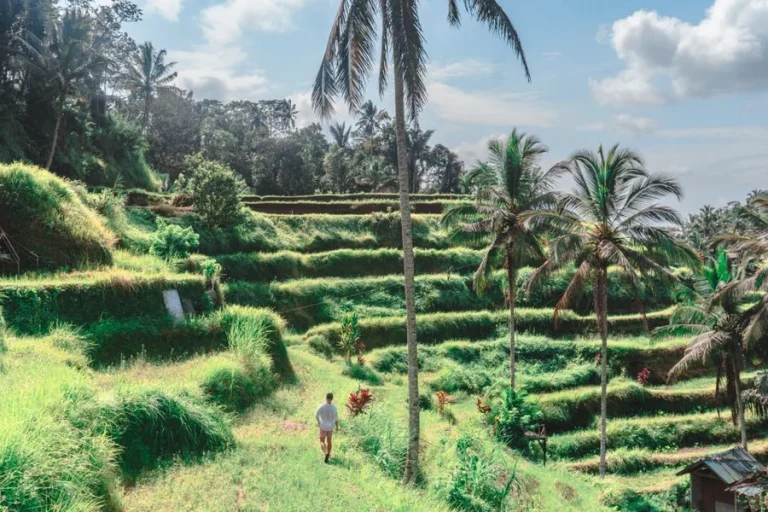

Two weeks is the threshold at which Bali stops being a destination and starts being an experience. It is long enough to spend meaningful time in multiple areas without rushing between them, to return to places that earned a second visit, and to encounter the parts of the island that are only visible to travelers who are not moving too fast to notice them. The itinerary below covers all of Bali’s main areas with enough depth in each to produce genuine familiarity rather than a surface impression. It is structured around geographic logic and realistic travel times, with open space built in for the kind of unplanned discoveries that two weeks provides enough room for.
Before You Arrive: Planning for a Longer Trip
Two weeks in Bali involves more logistical variables than a shorter visit, and sorting several of them before departure makes a measurable difference to how the trip runs from day one.
1. Structuring the Bases
The itinerary below uses four bases: the south coast for the opening and closing sections, Ubud for the cultural middle, the east coast for a quieter interlude, and a return to the south for the final days. Booking all four in advance, rather than deciding as the trip progresses, ensures availability at the better properties and removes a recurring planning burden from the trip itself. For a two-week trip, accommodation flexibility is a lower priority than accommodation quality and location.
2. Transport Planning for Two Weeks
A two-week Bali itinerary involves multiple base changes, several day trips from each base, and a mix of long and short journeys. The most practical transport arrangement combines a pre-booked airport transfer for the arrival and departure legs with day driver arrangements for the multi-stop days and cross-island transitions. Travelers who prefer having the core activities and transport coordinated from the start often find that a well-structured bali tour package covering the key experiences reduces the planning burden significantly, particularly for the more logistically complex sections of a longer trip.
Days 1-3: South Coast Arrival and Orientation
The opening days of a two-week trip should be deliberately unhurried. There is enough time ahead to do everything; the first three days are for settling in and establishing a baseline rhythm.
3. Arrival and the First Two Days in Seminyak
Seminyak is the right starting point for a two-week trip. It has beach access, a high concentration of good restaurants and cafes, and a central enough position to reach everywhere else on the island without an excessive drive. The first two days are best spent exploring the immediate area on foot: the beach, the Petitenget temple, the main dining strip, and the beach clubs that define the south coast experience. Seminyak rewards slow exploration more than most parts of the island, and arriving with a full program for the first days misses what the area does best.
4. A Day Trip to the Bukit Peninsula
Day three is the right time for the first day trip, while the base is still Seminyak and the Bukit Peninsula is within easy reach. The clifftop walk at Uluwatu, the hidden beaches at Padang Padang and Bingin, and the Kecak fire dance at sunset cover the essential Bukit experience in a single day. Timing the departure from Seminyak for 9am avoids the worst of the south coast traffic and arrives at the beaches before the main day-tripper groups from Ubud and the east.
Days 4-6: Moving to Ubud
Ubud marks the first significant shift in the trip’s character. The move from the coast to the interior changes everything: the temperature, the pace, the sensory environment, and the cultural density. Three days here is the minimum that allows the place to open up properly.
5. Settling Into Ubud
The first afternoon in Ubud is best spent walking the town center and the surrounding streets rather than visiting a specific site. The morning market, the main street temples, and the ridge walk above the Wos River give a clear initial picture of what the town is and how it differs from the south coast. Dinner at one of the garden restaurants above the river gorge is the right way to end the first Ubud evening.
6. Temple Circuit and the Sacred Sites
A full day covering Tirta Empul, Gunung Kawi, and Pura Kehen is the most culturally concentrated day available anywhere in Bali. Tirta Empul is a holy spring temple where purification rituals have been practiced for over a thousand years. Gunung Kawi is a tenth-century royal monument carved directly into a cliff face above a river gorge. Pura Kehen is a multi-terraced state temple in the Bangli highlands that receives a fraction of the visitors of the more famous sites and rewards the additional drive time with an atmosphere of genuine stillness. The circuit covers about 90 minutes of total driving and is best done with a day driver who knows the sites and their timing.
7. The Mount Batur Sunrise Trek
The Mount Batur trek requires a pre-dawn departure from Ubud, typically around 2am, for a two to three-hour ascent to the rim of an active volcano in time for sunrise. The views on a clear morning, looking out over the caldera lake and across to Agung and the surrounding peaks, are among the best in Bali. The trek is accessible to most reasonably fit travelers without specialist equipment. Booking through a reputable guide operator and sleeping in the afternoon before the departure is the standard preparation for a day that starts in the middle of the night.
Days 7-9: East Bali
East Bali is the part of the island that most two-week travelers identify, in retrospect, as the unexpected highlight. It is less visited, more dramatically landscaped, and has a quieter pace than anywhere else on the island.
8. Tirta Gangga and the Royal Water Palace
Tirta Gangga is a royal water palace set in a hillside garden in Karangasem regency, about 90 minutes east of Ubud. The complex is far less visited than the central highlands sites and has a quality of stillness that becomes increasingly rare across Bali’s more touristed areas. The surrounding rice terrace walks, which are genuinely beautiful and entirely free of the commercial infrastructure that surrounds Tegallalang, can fill a morning at a pace that the rest of the itinerary rarely allows.
9. Amed and the Underwater World
Amed is a quiet fishing village on Bali’s northeast coast with some of the best snorkeling and diving accessible from the shore. The black sand beach at Jemeluk Bay has a reef directly offshore that can be reached without a boat, and the USAT Liberty shipwreck at Tulamben, 20 minutes north, is one of the most accessible wreck dives in Asia. Two nights in Amed provides enough time to do both sites properly rather than rushing through either as a day trip.
10. The Drive Back: Besakih and the Volcanic Landscape
The return from east Bali to the south coast or Ubud passes through the volcanic landscape around Mount Agung, Bali’s highest and most sacred peak. Pura Besakih, the largest and holiest temple complex in Bali, sits on the slopes of Agung at an altitude of about 1,000 meters and is worth a stop on the return drive. The complex covers several hectares and requires a guide for the inner temple areas. The approach road, lined with vendors and the standard offering of unofficial guides, is worth navigating with patience; the temple complex itself justifies the effort.
Days 10-11: North Bali
North Bali is the least-visited major area of the island and the one that provides the clearest contrast to the south coast tourism infrastructure. The landscape is drier, the coastline is darker, and the pace of daily life has a character that is genuinely different from anywhere else on the island.
11. Lovina and the Dolphin Watch
Lovina is a quiet coastal town on the north coast, about two hours from Ubud, known for its daily dolphin watching tours that depart before sunrise in traditional jukung outrigger boats. The dolphins are spinner dolphins that feed in the bay in the early morning, and the experience of watching them in open water from a traditional boat at dawn is one of the more quietly memorable things available to visitors in Bali. The town itself is unhurried and unpretentious, with a character that reflects the north’s position outside the main tourist circuit.
12. Gitgit Waterfall and the Highland Drive
The drive between Lovina and the central highlands passes through a landscape of coffee plantations, clove trees, and mountain lakes that is entirely different from the coastal and rice field environments of the south. Gitgit Waterfall, a 40-meter cascade accessible by a 20-minute walk from the road, is the most visited natural site in the north and is best seen early in the morning before tour groups arrive. The twin lakes of Buyan and Tamblingan, higher in the highlands, provide a final view of the volcanic landscape before the descent back to the south.
Days 12-13: Return to the South Coast
The final days of a two-week Bali trip work best back on the south coast, close to the airport and with access to the higher concentration of restaurants and evening options that make for a satisfying end to an extended trip.
13. Canggu for a Change of Pace
Canggu provides a different character from Seminyak for the return south coast days. The town has a casual, creative energy, a coffee and food scene that has developed into one of the best in Southeast Asia, and a beach that suits an afternoon of watching surf rather than lying in it. After two weeks on the island, the slower pace of a Canggu afternoon, with a long lunch at a canal-side cafe and an evening at one of the live music venues on Jalan Batu Bolong, feels like a natural way to begin transitioning back toward departure.
14. A Final Day in Seminyak
The last full day in Bali belongs to whatever was missed or worth repeating from the opening days. The itinerary has covered most of the island by this point, and the last day is less about adding new experiences than about returning to the places and moments that made the strongest impression. A final beach walk at sunset, a long dinner at the best table of the trip, and a last coffee at a place that earned the return visit: these are the activities that the last day is for.
Day 14: Departure
The departure day of a two-week trip carries a different emotional weight than the end of a shorter visit. The island has had enough time to become familiar, and the departure feels more like leaving a place than ending a holiday.
15. The Final Morning and the Drive to the Airport
The last morning should be kept free of fixed plans. A slow breakfast, time for any final purchases, and a drive to the airport with a 30-minute buffer beyond the estimated journey time covers the practical requirements without pressure. For travelers who have arranged their trip logistics through Bali Touristic, the departure transfer is typically the last in a series of smooth logistical handoffs that began at the arrivals terminal two weeks earlier. The best two-week Bali trips end the same way they begin: with the feeling that the logistics were invisible and the experience was everything.
What Two Weeks in Bali Actually Gives You
Two weeks is enough time to move through the island’s main areas without feeling rushed, to establish genuine familiarity with a few places rather than a superficial impression of many, and to encounter the version of Bali that is only available to travelers who are present long enough for it to reveal itself. The itinerary above covers all of this, but the most valuable parts of it are the spaces between the named sites: the unplanned stops, the conversations with drivers and hosts, and the afternoons that went nowhere in particular and were better for it. Those are the things that a two-week Bali trip makes possible, and they cannot be planned into an itinerary. They can only be left room for.